
Can You Clean Artificial Turf Yourself, or Call a Pro?
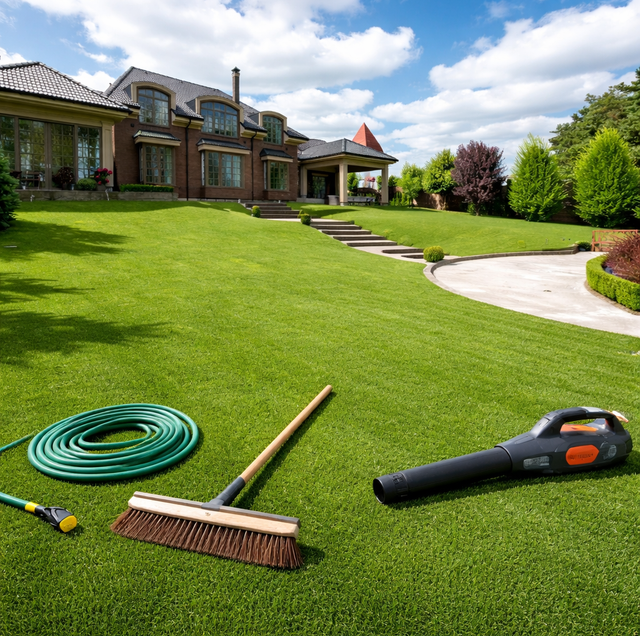
Quick Answer: You can clean artificial turf yourself for routine upkeep like rinsing, brushing, picking up waste, clearing debris, and light deodorizing. But deep odor from uric-acid buildup, sanitizing, compacted infill, slow drainage, and heavy-duty cleaning require professional equipment and expertise.
There is a comfortable belief that comes with a synthetic lawn: it was sold as low maintenance, so surely a hose and a squirt of dish soap keep it clean forever. For a while, that even looks true. You rinse the blades, they go bright again, the yard smells fine, and you file turf cleaning under "handled." The trouble is that a synthetic lawn does not clean itself, and the part a hose reaches is the easy part. What builds up out of sight, down in the infill, is the part that decides whether the turf stays fresh or slowly turns.
So the honest answer to "can I clean it myself" is: partly. A good chunk of turf care really is a homeowner job, and doing it well spaces out the harder work. But a hose has a ceiling, and knowing where that ceiling sits is what keeps you from either calling for help you did not need or skipping help you do. Here is the split, task by task.
What a Hose, a Brush, and a Blower Handle Well
Routine upkeep is squarely DIY, and it matters more than people think. The maintenance you can do at home is not a lesser version of a professional clean; it is a different job, aimed at keeping debris, hair, and fresh waste from ever working down into the turf where they get expensive to remove.
Light rinsing: a weekly pass with a garden hose clears pollen, dust, loose dirt, and dried-on residue before it packs down. On a pet yard, a quick daily rinse of the favored spot dilutes fresh urine at the surface so less of it concentrates in the infill. This is the single highest-value thing you can do yourself, and it costs you a few minutes.
Cross-brushing the fibers: turf blades lie down under foot traffic and sun, and once matted they trap more debris and look worn. A stiff synthetic-bristle push broom, worked against the grain rather than with it, lifts the blades back upright and redistributes the top layer of infill. Cross-brushing high-traffic lanes every few weeks does more for how the lawn looks than any cleaner does.
Picking up solid waste: scooping pet waste the same day, before it is stepped on and driven into the blades, prevents most odor problems from ever starting. Waste left to break down in the sun is what feeds the bacteria you later have to pay to remove.
Clearing debris: a leaf blower on a low setting, or a plastic rake, pulls leaves, twigs, and grass clippings off the surface so they do not decompose into the infill or clog the drainage holes. Keeping the surface clear is half of keeping the drainage open.
Light deodorizing: a turf-safe enzymatic spray, applied to a pet zone every few weeks and given time to sit, digests fresh urea before it hardens into the crystalline uric-acid deposit that causes lasting smell. Used on new waste, an enzyme treatment at home does slow the buildup. Its limit is that it only works on what it reaches, and a hand sprayer does not carry it far into packed infill.
Do these five things and the turf stays presentable on its own for a long stretch. What they share is that they all work at or near the surface, on fresh material, before it has a chance to bind, compact, or crystallize. That is exactly the zone a homeowner can reach.
Where Home Cleaning Runs Out of Reach
The ceiling shows up when the problem is no longer on the surface. Once waste, minerals, and bacteria have settled an inch down into the infill, or once the infill itself has compacted, the tools in your garage stop being enough, and pushing them harder can make things worse.
Deep odor and uric-acid deposits: aged dog urine leaves uric-acid salts and urates that dry into hard, sticky crystals clinging to the infill grains and the backing. Plain water will not dissolve them, and a surface enzyme spray rarely reaches them. Lifting them out takes hot-water extraction, a machine process that flushes the loosened deposit and vacuums the dissolved salts, dead bacteria, and organic sludge physically up and out of the turf. A garden hose can wet that load but has no way to draw it back out, which is the whole difference. Removing the reservoir is the only thing that stops odor from rebuilding, and there is no home version of it.
Sanitizing: rinsing lowers the visible mess but does not disinfect the infill, where bacteria colonize the moist, organic layer around the fiber base. A professional process typically runs an anti-bacterial pre-soak before extraction. Companies in this space state high kill percentages for those products against organisms such as E. coli and Salmonella; treat those figures as the provider's own claims rather than settled science, but the point stands that a pre-soak plus extraction targets the bacterial layer in a way a hose cannot.
Matted, compacted fibers: a hand broom lifts light matting, but turf that has been packed flat for years, or infill that has compacted into a hard layer, needs a commercial power broom. That machine decompacts and refluffs the infill and stands the blades back up with a force a push broom cannot match. Compacted infill is also what quietly strangles drainage.
Drainage checks and re-infill: synthetic turf drains through a perforated backing into an aggregate base beneath it. When infill compacts, or fine grit clogs the top layer, water sits longer, the root zone stays wet, and odor gets stronger. Diagnosing whether slow drainage is surface debris (yours to fix) or compacted infill (not) is a judgment call, and correcting it often means power brooming plus an infill top-up to restore the right depth. Under-filled turf lets the blades lie flat and hold more waste, so re-leveling the infill is part of the fix, not an upsell.
Power washing hardened waste and edge repair: dried, crusted deposits and old vomit spots that a garden hose leaves behind need controlled power washing, and lifting edges or exposed seam nails is a repair step most homeowners are not equipped to handle safely.
The pattern here is the mirror image of the DIY list: these jobs all live below the surface or require commercial-grade equipment, and they deal with material that has already bound or compacted. That is the line.
DIY Is Enough When, and Call a Pro When
Put the two lists together, and the decision usually makes itself. It comes down to how the turf is used, how deep the problem has gone, and whether you are maintaining a clean lawn or trying to rescue one.
DIY is enough when the turf sees light to moderate use, has no resident pet or only an occasional one, and you are keeping up with rinsing, brushing, and debris removal on a routine. If the lawn looks and smells fine and you are just maintaining that, a hose, a broom, a blower, and an occasional enzyme spray will hold the line for a good while.
Call a pro when the signals point below the surface: an odor that keeps coming back within days of your own cleaning, blades that stay matted flat no matter how you brush, water that puddles or drains slowly after rain, visible white mineral scale that will not rinse off, or a household with a heavy-use pet yard. A yearly or twice-yearly deep clean also resets a lawn that routine care alone cannot fully keep ahead of, particularly with dogs.
| The task | Do it yourself | Bring in a pro |
|---|---|---|
| Weekly rinse, debris, solid waste | Yes, routine | |
| Cross-brushing to lift blades | Yes | When matted flat for years |
| Fresh pet-zone odor | Light enzyme spray | Odor that returns in days |
| Uric-acid buildup deep in infill | Hot-water extraction | |
| Compacted infill, slow drainage | Clear surface debris | Power broom, drainage check |
| Infill top-up and re-leveling | Yes | |
| Sanitizing after illness or heavy use | Yes |
A useful way to read the table: the left column is about prevention on fresh material, and the right column is about removal of what has already set. You can do a lot to keep problems from forming. Once they have formed and gone deep, the job changes from cleaning to extraction, and that is the handoff point.
Matching the Effort to the Mess
The reason "can I do it myself" has no single answer is that turf care is really two jobs wearing one name. There is the steady, surface-level upkeep that keeps a lawn from getting dirty, which is yours and rewards consistency more than effort. And there is the periodic deep reset that pulls out what upkeep cannot reach, which needs machines built for it. Skipping the first makes the second come around faster; skipping the second lets a maintained-looking lawn hide a problem that only a nose, or a rainy day, reveals.
Most homeowners land in a rhythm: handle the rinsing, brushing, waste pickup, and light deodorizing themselves, and schedule a deep extraction clean when the odor stops responding, the fibers stay flat, or the drainage slows. That division keeps the routine quick and low-effort and saves the equipment-heavy work for when it is actually needed. You are not choosing between doing it all yourself and handing off everything; you are splitting the work along the line where a hose stops reaching.
Frequently Asked Questions
It is safer not to. Bleach and acidic or caustic cleaners can discolor fibers and degrade the backing and its coating over time, and oil-based or heavy degreasing soaps leave a sticky residue that actually attracts more dirt and can clog the drainage holes. A mild dilution of dish soap on a small grease spot is usually fine, but for anything routine, a turf-safe enzymatic or bio-enzyme cleaner is the better tool because it digests organic waste instead of coating the fibers. Whatever you use, rinse thoroughly afterward so no film is left behind.
Use a push broom with stiff synthetic bristles, nylon or poly, never a metal or wire brush, which can shred and fray the plastic blades. Brush against the grain, meaning across or opposite the direction the fibers naturally lean, since that is what lifts them upright and redistributes infill. Brushing with the grain just flattens them further. Once every few weeks in high-traffic lanes is plenty; over-brushing does not help and can fling infill out of place. If the blades will not stand up no matter how you brush, the infill underneath has likely compacted, which is a power-broom job rather than a hand-broom one.
No, and it can backfire. A rented pressure washer blasts the surface but has no way to pull the loosened waste back out, so dissolved salts and bacteria mostly resettle as the turf dries. Held too close or at too high a setting, the stream can also displace or blow out the infill, flatten seams, and even separate the backing, leaving you with a re-leveling problem on top of the original one. Professional extraction pairs a controlled wash with a vacuum step that removes the dissolved load from the infill, which is the part that stops odor from rebuilding. The vacuuming, not the spraying, is what a rental cannot replicate.
Sometimes the surface half is yours. If leaves, dust, and fine grit have built a mat on top, clearing it with a blower and a rinse can reopen the drainage holes. What you cannot fix at home is compacted infill: when the sand or crumb rubber packs into a hard layer, it clogs the perforated backing from within, and only decompaction with a power broom reopens it. Standing water that lingers well after a rain, especially with any odor, usually points to that deeper compaction rather than surface debris, and it is worth a professional look before the constant moisture makes the smell worse.
They stack. A weekly light rinse and same-day waste pickup are the baseline; an enzyme deodorizer on the pet zone every few weeks handles fresh urea, and a deep extraction clean resets what those cannot reach. Many services suggest a professional cleaning every four to six weeks for an active pet yard, while a lightly used lawn with no pets can stretch much longer between deep cleans. The better you keep up the home routine, the further apart the professional visits can be, because you are removing fresh material before it has a chance to bind into the infill.
Home care keeps a yard visibly clean and knocks down surface germs, but rinsing and brushing do not disinfect the infill layer where bacteria concentrate, so for a household that wants that layer addressed, periodic professional sanitizing is the piece DIY cannot cover. A professional process usually includes an anti-bacterial pre-soak and extraction aimed at that zone; the high kill percentages companies quote for those treatments are their own stated figures rather than medical guarantees, so think of the service as reducing the bacterial load, not as health protection. If anyone in the home is medically vulnerable, that is a question for their doctor, not a cleaning decision.
Book a deep extraction clean when home care stops keeping up, and let a machine pull the buildup out of the infill. TurfWash serves Phoenix and the surrounding metro, from Scottsdale and Mesa to Gilbert, Chandler, Glendale, and Surprise. Call (602) 560-8582.
