
Flattened Artificial Turf: Can It Be Fixed or Is It Done?
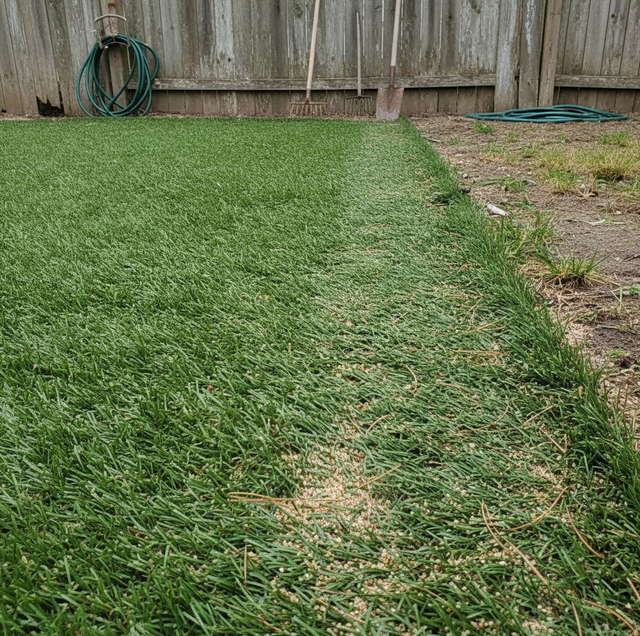
One lane through the lawn has gone flat and shiny, the blades lying down in the same direction like hair that refuses to stop cowlicking, while the untouched edges still stand up full and green. Wherever the dog cuts the corner, wherever the same few steps land day after day, the turf looks pressed and tired. So, you land on the question every owner of a worn traffic lane eventually asks: Is matted turf something you can bring back, or is the lawn finally spent?
Here is the honest version of the answer. Almost any flattened turf can be improved. The part that actually decides fix-or-replace is narrower: do the blades still have the spring to stand up, or are the fibers themselves worn out? Those are two different problems with two different answers, and telling them apart comes down to figuring out what is really holding the blades down.
Why Blades Lie Down in the First Place
Synthetic grass blades are made to bend and rebound. The plastic they are cut from, usually a polyethylene for soft home lawns or a stiffer nylon for putting surfaces, carries what installers call fiber memory: a built-in tendency to return to vertical after something pushes it over. Every time a foot, a paw, or a patio chair presses a blade flat, the fiber wants to spring back. Traffic wins in the short term, memory wins over the following hours, and a healthy lawn cycles between the two without ever looking permanently matted.
Three things break that cycle. The first is sheer repetition. A pivot point by the gate or a run the dog takes fifty times a day never gets the quiet hours it needs to recover, so the lane stays down. The second is heat. Blades warmed by the strong sun and infill that holds that heat go soft and pliable, and a soft blade that gets stepped on takes a set far more easily than a cool one. The third, and the one most owners miss, sits below the surface. The infill, the silica sand or crumb rubber, worked down between the blades, gets walked into a hard, compacted crust. Instead of cradling the lower third of each fiber and helping it stand, packed infill pins the blades down at the base and clogs the drainage holes in the backing. At that point, the grass is not tired so much as trapped.
Understanding which of those three is at work matters because two of those three, heat and compacted infill, are fully reversible, while worn-out fiber, a separate problem the later sections cover, is not.
The Fix-or-Replace Decision, Line by Line
Run your hand against the grain and watch what the blades do. Pliable fibers that flop over and slowly rise again still have their memory. Fibers that feel stiff and brittle, that crackle or split when you fold one between two fingers, have lost it. That single test sorts most of the table below.
| What you are seeing | Revive or replace | Why |
|---|---|---|
| Traffic lanes matted flat, blades still soft and pliable | Revive | Fiber memory is intact; decompaction and grooming stand them back up |
| Infill packed into a hard crust, blades pinned at the base | Revive | Loosening and topping up the infill releases the lower third of each blade |
| Blades shiny and laid over, but springy when you rub them | Revive | Cross-brushing resets the lean and breaks up the sheen |
| Fibers are brittle, cracking, or splitting when you bend them | Replace that zone | UV degradation has spent the memory; no grooming brings it back |
| Backing rippling, seams lifting, or drainage holes torn | Replace | This is a structural failure, not a blade problem |
| The whole yard is thin and lying flat after many years of sun | Replace | The face weight is worn down; there is little fiber left to stand |
The top three rows share a root cause you can undo. The bottom three do not, and no amount of brushing changes that. The most common mistake is treating a bottom-row lawn like a top-row one, brushing a brittle, sun-cooked yard week after week, and wondering why it never holds.
What a Professional Refresh Actually Does
Reaching for a stiff broom and combing against the grain is the right instinct, and on a lightly matted spot, it does help. The reason a professional refresh gets a deeper, longer-lasting result is that it works the layer a broom cannot reach: the infill.
The first move is decompaction. A power broom, essentially a rotating vertical brush driven by a motor, digs down and breaks apart the crusted infill that a hand rake only skates across. That does two jobs at once. It reopens the drainage path through the backing, and it frees the base of each blade so the fiber can pivot upright instead of being cemented at an angle. With the infill loosened, the same machine refluffs the pile, lifting and separating blades that had been pressed into one flat mat.
Then comes the part most owners never think about: the infill itself gets redistributed and, where it has thinned out, topped up. Infill migrates over time, walks out of the busy lanes and into the corners, and a lane that has lost its infill has lost the support that holds blades vertical. Leveling it back out and adding fresh material where it is low restores that scaffolding. A final grooming pass, cross-brushing against the dominant grain, sets the lean back to random and kills the shine that flattened fibers reflect. Combined with a wash that clears the embedded grit, dulling the blades, a full refresh is why a lane that looked finished can read almost new, no fibers replaced.
When Flattening Is Really the End
Some flat turf is past saving, and knowing the signs keeps you from paying to groom a lawn that needs replacing.
Ultraviolet light is the quiet killer. Years of strong sun slowly break down the polymer in the blades, and the degraded fiber loses its flexibility before it loses its color. That is why the bend test is so telling: a blade that snaps or crazes rather than folds has been embrittled by UV, and a brittle blade has no memory left to recover. On split-film, or fibrillated, blades, this shows up as the webbing splitting into loose fringe; on monofilament blades, it shows as tips that fray, curl, and break off. Neither comes back.
The backing is the other place flattening turns terminal. Underneath the pile sits a primary backing that holds the tufted blades and a secondary coat that locks them in. When the sun and years cause that backing to grow brittle, seams start to lift, the drainage holes tear, and the whole sheet can ripple or ruck up in the traffic lanes. A rippled surface reads as flattening but is really the base failing, and once the backing goes, grooming cannot fix a foundation problem. The same is true when the pile has simply worn thin. Every turf has a face weight, the ounces of yarn per square yard, and heavy traffic slowly grinds it down until there is not enough fiber left to stand, no matter how you brush it. When brittle blades, failing backing, or a spent face weight show up together in the busiest lane, that zone has reached the end of its service life, and a patch or a re-lay of that section is the honest call.
Reading Your Own Lawn
Start with your hand, not your wallet. Kneel in the worst lane, rub the blades the wrong way, and fold a few fibers over. If they flop and rise, feel soft, and the ground under them is packed hard, you are looking at a revivable lawn that mostly needs its infill loosened and its pile refluffed. If the fibers crack, the seams are lifting, or the pile has thinned to the backing, that section is worn out, and grooming will only buy a little time. Most yards are a mix: living, recoverable turf across the open areas and one or two hammered lanes that may need replacing on their own. Sorting the two before you commit to anything is what turns a vague worry about the whole lawn into a specific, solvable job.
Frequently Asked Questions
Do the bend test on a cool morning, before the sun softens the fibers and hides the difference. Fold a single blade over between two fingers: pliable fiber that springs back still has its memory, while fiber that feels stiff and cracks or splits has been embrittled by UV and will not recover. Warmed blades bend easily either way, so testing when the turf is cool gives you the truer read.
The tool matters more than the effort. A stiff synthetic-bristle broom or a specialty turf rake lifts fibers without harming them, but a metal-tined garden rake or a wire brush can snag the tufts and pull them loose from the backing. Brush against the grain, in varied directions rather than always the same one, and stop short of gouging into the infill. Done that way, regular grooming extends the life of the pile instead of shortening it.
Flattening concentrates wherever the same load hits the same fibers without a recovery window: pivot points by a gate, the line the dog runs, and under furniture that never moves. Static patio furniture is its own trap, because constant weight presses a permanent dent, and its feet grind the infill down. Nudging chairs and planters a few inches regularly and rotating a play or lounging area spreads the wear so no single lane takes all of it.
Often, yes, because infill does more than weigh the turf down. Sand or rubber worked into the base supports the lower third of each blade, and blades in a lane that has lost its infill have lost the scaffolding that keeps them vertical. Topping the infill back up toward the manufacturer's recommended depth, usually to within roughly a half inch of the blade tips, restores that support and lets the pile stand again. It is one of the most overlooked reasons a lane goes flat.
It behaves differently because it is built differently. Putting surfaces use short, dense nylon fiber with strong memory and little or no infill to hold it up, so you cannot decompact and refluff a green the way you refresh a taller lawn pile. A matted green usually responds to grooming and a proper wash rather than infill work, and because the pile is so short, a worn or scalped patch tends to need replacement sooner than the same wear would on a longer, softer pile.
Light cross-brushing every couple of weeks in the busiest lanes keeps fibers from taking a permanent set, and varying the direction each time stops a fixed grain from forming. A deeper professional decompaction and cleaning on a roughly four- to six-week cycle, depending on how hard the yard is used and how many pets share it, resets the infill and pile before matting becomes stubborn. The heavier the traffic, the closer to the short end of that window you want to stay.
See whether your matted lanes can be revived before you pay to replace them — book a turf blade, infill, and life inspection, then a decompaction, a refluff, an infill top-up, and a grooming refresh. TurfWash serves Phoenix and the surrounding metro, from Scottsdale and Mesa to Gilbert, Chandler, Glendale, and Surprise. Call (602) 300-7559.
