
Can Dogs Get Sick From Dirty Artificial Turf? What Lives in It
Your dog treats the backyard turf like a full-body experience. A sprint across it, a hard skid, then a roll onto the back with all four paws in the air, nose pressed down into the blades. Later, that nose goes straight into a food bowl, and those paws get licked clean on the couch. It looks like play, and mostly it is. What makes some owners pause is a fair question: if the turf has not been properly cleaned in a while, what is your dog rolling in?
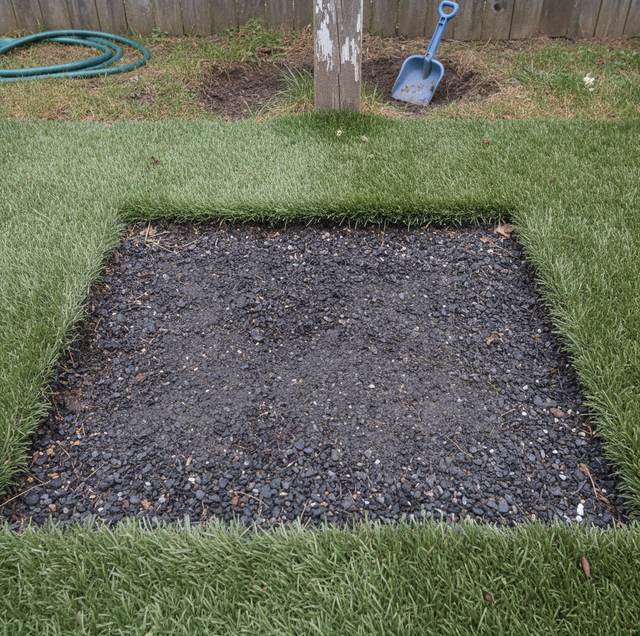
Artificial turf does not grow anything, so it is easy to assume nothing lives in it. The blades are plastic, and the base drains. The part that holds trouble is lower down, in the infill, the layer of sand or rubber granules packed around the base of the fibers. That is where urine settles, where solid waste residue works down after cleanup, and where moisture lingers out of the sun. Left alone long enough, that layer stops being an inert cushion and starts acting like a reservoir.
What Can Live in Neglected Infill
Two different things build up in soiled infill, and they carry different kinds of risk.
The first is bacteria. Dog waste and urine feed bacterial growth, and warm, damp granules make a hospitable medium for it. Heat speeds that activity along, but a shaded corner that never fully dries stays hospitable in cooler weather, too, so this is a year-round mechanism rather than a hot-season one. Some of these bacteria are ordinary environmental organisms. Others, the kind associated with fecal contamination, are the ones owners actually worry about.
The second, and the one people underestimate, is parasites. Intestinal parasites spread through microscopic eggs and cysts passed in an infected dog's stool. Roundworm and hookworm shed eggs, Giardia sheds cysts, and coccidia shed oocysts. When a dog with one of these relieves itself on the turf, and the residue is not fully removed, those eggs and cysts stay behind in the infill. They are far too small to see and far too small for a scoop or a rinse to reliably lift out. A dog that later sniffs, licks, or mouths that same spot can pick them up. This fecal-to-mouth route is how most of these parasites move from one dog to the next, which is why the turf itself becomes part of the chain.
None of this means a dog playing on turf is destined to get sick. Plenty of dogs share plenty of yards with no trouble at all. It means the risk is real enough to manage, and that a clean surface is doing quiet work you cannot see.
Why Turf Cannot Clean Itself
Here is the difference that surprises people. In a real lawn, waste that is not picked up gets broken down. Soil is a living system: earthworms, beetles, fungi, and billions of bacteria digest organic matter and, over time, break down much of what lands on it, including many pathogens, which are exposed to that competition and the elements. It is a slow, imperfect process, but it is a process.
Infill has none of that. Sand and crumb rubber are inert. There is no soil food web underneath to consume waste residue or to outcompete the organisms living in it. So whatever gets down into the granules and is not physically removed simply stays, protected from the sun at the base of the fibers and rewetted every time the turf is rinsed or it rains. Add the fact that low natural rainfall in many climates rarely flushes the layer, and residue concentrates instead of clearing. The surface can look spotless while the infill holds onto a growing load. Turf is lower-maintenance than grass in most ways, but self-sanitizing is not one of them.
Warning Signs Worth Watching
You cannot see bacteria or parasite eggs, so you watch for the conditions that suggest buildup and for changes in your dog. None of these is a diagnosis. Think of them as reasons to get the turf properly cleaned, and, if your dog seems unwell, reasons to call your veterinarian rather than wait.
Signs the turf itself needs attention:
- A sour or sharp ammonia odor that returns quickly after a rinse, strongest when the infill gets wet
- Dark, damp, or slick patches in the infill that stay wet long after the surface looks dry
- More flies or gnats hovering over one area of the turf than the yard around it
- A greasy or biofilm-like feel low in the fibers when you press a cloth into a used spot
Signs in your dog that are worth a vet call, especially alongside the above:
- Loose stool or diarrhea that keeps recurring, particularly if more than one dog in the home has it
- Scooting, excessive licking of the rear, or visible rice-like segments or worms in the stool
- Repeated paw-licking, skin irritation on the belly or paws, or new reluctance to lie on the turf
A single soft stool is not an emergency. A pattern, blood in the stool, vomiting, lethargy, or any of these in a puppy is a reason to stop guessing and let a vet look. Turf cleaning reduces the environmental load; it does not treat a dog that is already sick.
Which Dogs Face the Most Risk
Exposure is not equal across every dog or every yard.
Puppies are the clearest case. Their immune systems are still developing, they explore with their mouths, and they are on a vaccination schedule that is not yet complete, so they are more vulnerable to organisms an adult dog would shrug off. Dehydration from diarrhea also hits a small puppy much faster and harder. Dogs that are older, unvaccinated, recovering from illness, or on medication that suppresses immunity sit in a similar higher-risk group.
The other big factor is how many dogs use the surface. A single healthy adult in a private yard presents a low, contained risk. A yard shared by several dogs, or a boarding kennel, doggy daycare, dog park, or apartment pet-relief area, is a different situation. More dogs mean more waste, more chances that one of them is shedding a parasite, and a real path for it to reach the others through the same infill. Shared and multi-dog surfaces are exactly where a serious sanitizing routine earns its keep, and where casual scoop-and-rinse upkeep falls furthest behind.
What Real Cleaning Removes That a Rinse Does Not
This is where the gap between tidy and sanitary shows up. Picking up solids and hosing the turf handles what you can see. It does little for what is bound into the infill, because parasite eggs are sticky and bacteria live in a film down at the fiber base, where water pressure from a hose does not reach. A rinse can even spread contamination sideways rather than lift it.
Removing that load takes a physical and chemical combination rather than a spray alone. Power brooming first decompacts the infill so the granules are not sealed into a hard crust, then a wash and a machine extraction pull waste residue, uric acid crystals, and much of the bound organic material up and out of the layer instead of pushing it deeper. A thorough sanitizing routine adds an anti-bacterial pre-soak, which providers state kills the large majority of common bacteria and viruses on contact, and a final bio-enzyme application that digests remaining uric acid and organic matter. Those efficacy figures are stated results for a cleaning process, not a medical guarantee for any individual dog, and no cleaning eliminates every organism or replaces veterinary care and current vaccinations.
The practical point is the mechanism. Extraction removes material from the infill; a topical spray or deodorizer primarily treats the surface and the odor. For the fecal residue that carries parasite eggs, the direction that matters is out.
Frequently Asked Questions
Yes, that delay is exactly how these organisms spread. An infected dog can shed Giardia cysts or worm eggs and show no obvious symptoms, so a shared surface can be contaminated with nothing visibly wrong. The eggs and cysts do not need the other dog present; they wait in the infill. This is why boarding kennels, daycares, and dog parks pay closer attention to turf sanitation than a single-dog household usually needs to, and why a new dog joining a multi-dog yard is worth a fecal check.
Longer than most people expect, which is the problem. Roundworm eggs are famously durable and can remain infective in soil for months and, in the right conditions, years, because a tough outer shell shields them from drying and temperature swings. Giardia cysts are less hardy but can persist for weeks in cool, damp conditions. Infill offers a similar sheltered, rewettable environment without the soil organisms that would otherwise degrade them, so the timeline does not shorten just because the surface is synthetic. Time alone is not a reliable cleaner here.
It adds one. Beyond the fecal-to-mouth route for parasites, a dog that actively mouths or swallows loose infill can ingest silica sand or crumb rubber granules, which is a digestive irritation and, for a small dog, a mild choking or blockage concern with enough volume. If your dog is a determined turf-chewer, mention the habit to your vet and keep the surface clean and the infill properly leveled to minimize loose granules, since exposed, washed-out infill is easier for a dog to pick up.
Not reliably. Worm eggs are coated to stick to surfaces and resist being rinsed off, and a garden hose lacks the pressure and the extraction to lift them out of the infill; at best, it relocates them. Direct sun and full drying do help degrade some organisms over time, but you cannot count on shade, moisture, and buried granules cooperating. Meaningful removal takes decompaction and machine extraction that pulls the residue out of the layer rather than washing it around on top.
It helps with part of the problem, not all of it. Antimicrobial-treated infill is designed to slow bacterial growth on the granules, and manufacturers state it reduces odor and microbial buildup. What those coatings are not built to do is neutralize parasite eggs and cysts, which are not bacteria, and any surface treatment can wear down and get buried under fresh waste over time. Treat antimicrobial infill as a helpful layer, not a substitute for regularly removing waste residue.
Cleaning is prevention, not treatment, so the two are separate decisions. Call your vet if your dog has diarrhea lasting more than a day or so, blood or mucus in the stool, visible worms, repeated vomiting, low energy, or a poor appetite, and call sooner rather than later for a puppy, a senior, or a dog with a known health condition, because dehydration and parvovirus-type illness move fast in vulnerable dogs. Bringing a fresh stool sample lets the vet check for parasites directly. Clean the turf to stop reinfection, but let the vet handle a dog that is already sick.
The Sensible Way to Think About It
A dirty turf yard is not a guaranteed illness, and a clean one is not a medical shield. The honest middle is this: soiled infill can hold bacteria and durable parasite eggs, it has no soil life to break that load down on its own, and the dogs least able to handle it are puppies, unvaccinated dogs, and any dog sharing the surface with others. Regular, extraction-based cleaning keeps that hidden load low, which is the part you control. Your vet, current vaccinations, and routine fecal checks handle the part you cannot. Run both, and the roll across the yard stays what it looks like from the patio, which is just a happy dog.
Want the infill actually cleaned out instead of just rinsed off — book a deep extraction and sanitizing service. TurfWash serves Phoenix and the surrounding metro, from Scottsdale and Mesa to Gilbert, Chandler, Glendale, and Surprise. Call (602) 560-8582.
