
Why Artificial Turf Smells Worse After Rain (It's the Infill)
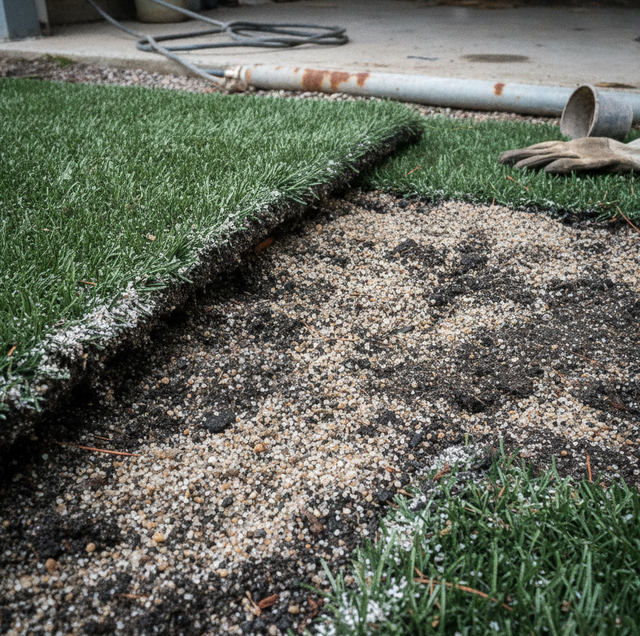
Quick Answer: The smell did not arrive with the rain. It was already sitting in the infill, dried out and quiet. The rain woke it back up.
You step out the back door the morning after a good rain, coffee in hand, expecting that clean-rinsed smell. Instead, the yard hits you with a sour, sharp ammonia note that was not there a few days ago. The turf looks fine. If anything, it looks cleaner. But it reeks, and it seems to get stronger as the sun climbs and the surface starts to dry. If you have a dog, this is one of the most common complaints, and it throws people off because rain is supposed to wash things away, not make them worse.
The short version: the smell did not arrive with the rain. It was already sitting in the infill, dried out and quiet. The rain woke it back up.
The Smell Was Already There, Just Dried Out
When a dog urinates on turf, the liquid drains through the blades into the infill layer below. The water part evaporates quickly in a hot, dry climate where the surface can sit well above the air temperature for much of the year. What remains is the dissolved load: urea, mineral salts, and the organic material that bacteria feed on. Bacteria in the infill break the urea down, and that process gives off the ammonia you smell. Dog urine also leaves uric-acid salts and urates behind as it ages, and these dry into hard crystalline deposits that cling to the sand grains and the base of the fibers.
Here is the part that surprises people. Dry ammonia salts are close to odorless. The molecule your nose reads as "dog pee" is ammonia gas, and ammonia only lifts into the air when there is moisture to carry it. So a bone-dry yard in a rainless stretch can smell almost neutral even with months of buildup sitting in the infill. The odor is not gone. It is parked, waiting for water.
Why Rain Flips the Switch
Rain, heavy dew, humidity, and even a long irrigation cycle all do one thing very efficiently: they rewet that dried salt load. Once the crystals dissolve again, the bacteria go back to work, and the ammonia is free to gas off. That is why the reek shows up within hours of the first real moisture after a dry spell, and why it often peaks not during the rain but just after, as the sun comes out and the warm, damp infill begins to evaporate. Warmth speeds up the reaction and pushes more gas into the air at once, so a humid morning that turns into a hot afternoon is about the worst-case scenario for odor.
This is also why the problem reads as seasonal when it is not. In a climate with long dry stretches, urine is rarely flushed away naturally, so it concentrates in the infill month after month. The smell seems to arrive with the rain, but the rain is only the trigger; the load built up during all the dry weather in between. Cold runs the same trick in reverse, quieting a yard through a freeze and then bringing the odor back on the thaw. Moisture, not the month on the calendar, is the switch.
The Infill Is Where the Odor Actually Lives
Most turf is filled with one of a few materials, and each handles urine differently. Silica sand is the most common and the least expensive. It is porous and angular, so it holds urine and the salts left behind rather than letting everything wash straight through, which makes it the most odor-prone option once a dog favors the same patch. Crumb rubber drains better but holds heat, and warm infill speeds the bacterial reaction that makes ammonia. Coated antimicrobial infills and mineral infills like zeolite are sold specifically to slow odor. Zeolite is a natural mineral with a porous structure that adsorbs ammonia and holds it until the next rinse, and coated sands add a surface layer meant to keep bacteria from colonizing the grain. Makers state that these products substantially reduce odor, and many owners do notice a difference, but read those figures as the manufacturer's own testing rather than a guarantee. No infill removes the waste on its own; it only changes how fast the smell builds and how much material it holds.
Whatever the type, the infill sits below the blades where you cannot see it, and that is exactly where the uric acid salts, bacteria, pet hair, and fine organic debris pile up. Any fix that only touches the surface leaves the source untouched.
Drainage That Slowed Down Keeps It Wet Longer
Artificial turf is built to drain. The backing is perforated, and beneath it sits a compacted aggregate base graded to move water down and away. When that system works, urine and rain pass through quickly, and the infill dries between wettings. The trouble starts when the drainage slows down, and two things slow it.
First, the infill compacts. Foot traffic, pet traffic, and years of settling press the sand grains together, and compacted infill holds water like a sponge rather than letting it drain through. Second, organic debris blocks flow: leaf litter, dust, mulch blown in from beds, and fine grit driven in by wind all work into the blades and the top of the infill and choke both airflow and drainage. Once the root zone stays saturated, it turns anaerobic, and the bacteria that thrive without oxygen are the ones that give off the strongest sulfur and ammonia odors. A yard that drains slowly does not just smell after rain, it smells longer, because the infill stays wet for a day or two instead of drying by afternoon.
Hard water adds to it quietly. Every time the turf is rinsed with mineral-rich municipal or irrigation water, the water evaporates, leaving calcium carbonate scale on the blades and infill. That chalky white residue you sometimes notice is the scale, and it builds a crust that traps debris and slows drainage further.
Why a Garden Hose Doesn't Fix It
The instinct when the yard reeks is to grab the hose and rinse it down. It feels right, and it buys an hour or two of relief. Then the smell comes back, often a touch worse. The reason is chemistry. Urea, the fresh component of urine, dissolves in water, so a rinse can carry some of it off. But the dried uric acid salts behind the lingering ammonia odor are not meaningfully water-soluble. Plain water does not dissolve them and carry them out. It rehydrates them, reactivates the bacteria, and then, as the turf dries, the smell returns in full. A hard rinse also pushes part of that dissolved load deeper into the infill and spreads it into clean areas, widening the problem instead of ending it. Rinsing is the same mechanism that makes turf smell after rain, only done on purpose: it rewets the load without removing it.
What a Real Deep Clean Removes
Getting the smell out for good means physically removing the material that produces it, not masking it or rinsing it around. A real deep clean runs in stages, and each stage does a job a hose cannot. It starts with power brooming, a machine pass that decompacts and lifts the infill so it drains freely again, allowing any treatment to reach down into it instead of sitting on top. A power wash then breaks loose dried waste, hardened spots, and packed debris that a garden hose leaves behind. After that, a treatment goes down: enzymatic cleaners use bacteria and enzymes to digest uric acid and urea into compounds that evaporate, while oxidizing cleaners chemically break the odor compounds apart. Both can work, and both need contact time and the right conditions rather than a quick spray and rinse.
The step that separates a deep clean from a strong bottle of cleaner is extraction. Commercial extraction equipment pulls the loosened salts, dead bacteria, pet hair, and organic sludge up and out of the infill, the way a carpet extractor pulls dirty water out of a rug. That physical removal is the difference between neutralizing some of the odor and removing the source from the yard entirely. Providers that work this way also apply an anti-bacterial pre-soak before extraction and a bio-enzyme deodorizer after; the high bacteria-kill percentages quoted for those products are the companies' own stated figures, so read them as claims rather than settled science. What matters for the smell is the sequence: decompact, break it loose, treat it, and pull it out.
What It Comes Down To
The reason your turf smells worse after rain is almost never the rain itself. It is a buildup of dried urine salts and bacteria that sat quietly in the infill through the dry weather and got switched back on the moment they were rewet. Slow drainage and trapped debris make it linger; a garden hose only rewets it. Clearing it involves decompacting the infill, treating the salts, and extracting the material from the yard. Do that, keep a regular cleaning interval, and the next rain will rinse the turf instead of announcing everything living in it.
Frequently Asked Questions
Almost never. Urine does not rot or dissolve synthetic fibers the way it kills natural grass, so the turf itself is usually fine even after years of pet use. The problem lives in the infill, and infill can be topped up or swapped out on its own without pulling up the turf. If a yard has been under-filled from the start, sitting below the roughly one to three pounds of infill per square foot most products call for, the fibers lie flat and hold odor worse, and adding fresh infill after a deep clean is often part of the fix. A blade and infill inspection tells you whether you are looking at a cleaning or an infill replacement.
Dogs are creatures of habit and tend to return to the same spot, so the salt load concentrates in a small zone rather than spreading evenly. That corner also often sits where the grading is lowest, so rainwater runoff and hose water pool there and rehydrate the heaviest deposit in the yard. One small patch often carries most of the odor while the rest of the lawn stays neutral, so a targeted deep clean of that zone does more than treating the whole yard lightly.
Yes, with routine more than product. Pick up solid waste the same day rather than letting it work into the blades, and clear leaves and debris to keep drainage open. A light enzyme or bio-enzyme deodorizer applied to the pet zone every few weeks helps break down fresh urea before it crystallizes; many owners run one monthly between deep cleanings. Avoid the temptation to over-water or over-rinse the area, since extra moisture only rehydrates the existing salts. None of this removes an established deposit, but it slows how fast a new one builds.
Not for the deep odor. Baking soda is a surface deodorizer that sits on top of the blades and does little to reach salts locked in the infill below. Vinegar is acidic and can knock back fresh odor briefly, but it does not dissolve the uric acid crystals and can leave its own residue. Bleach is the one to avoid outright: it can damage turf fibers and backing, may void a turf warranty, and reacts with the ammonia compounds in urine to create harsh fumes. These are short-term cover-ups at best, not a cure for a saturated infill.
It quiets, but it does not leave. As the surface dries, the ammonia stops gassing off and the yard smells tolerable again, which is why people assume it's resolved. The salts are still there, and untreated uric acid deposits can stay active for months or even years, releasing odor every time they are rewet. Left alone, the deposit grows with each use, so each rain tends to smell a little stronger than the last rather than fading over time.
Neither solves it, and both can backfire. Watering more just delivers more of the moisture that reactivates the salts, so a yard rinsed daily can smell worse, not better. Shade cloth or a cover lowers the surface temperature, which slows the bacterial reaction a little, but it also traps humidity near the ground and slows drying, keeping the infill damp and odor-active longer. Better airflow, open drainage, and removal of the underlying deposit do far more than changing sun or water exposure.
Book a deep clean and extraction to pull the odor source out of your turf, not just rinse it around. TurfWash serves Phoenix and the surrounding metro, from Scottsdale and Mesa to Gilbert, Chandler, Glendale, and Surprise. Call (602) 560-8582.
