
Why Pet Odor Comes Back Days After You Clean the Turf
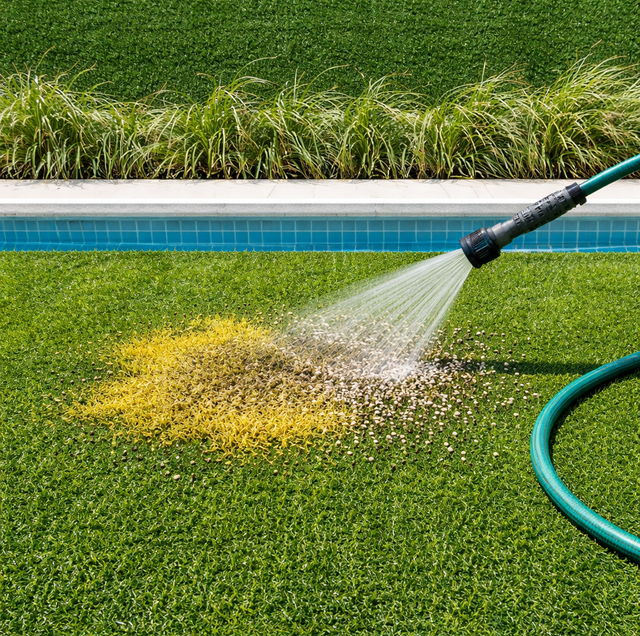
You spent an afternoon on it. You rinsed the turf down, worked in a cleaner, maybe hit the bad corner twice, and by evening the yard smelled clean and green the way it did the week it went in. For two or three days it held. Then you walked out one morning, and the dog smell was back, low and sour at first, then unmistakable by the afternoon. Nothing spilled, no accident you saw, and the turf still looks spotless. It is a frustrating pattern, because the cleaning clearly did something. The smell left; it just did not stay gone.
That short gap between clean and stink is not random, and it is not a sign you did a bad job scrubbing. It is a clue about where the odor actually comes from and what a surface cleaning does and does not touch.
The Few-Day Gap Is Telling You Something
Think about what happened in those two or three good days. The smell was truly gone, or close to it, which means the cleaning knocked it down. Then it came back on its own, without a fresh accident. Something that was still present rebuilt the odor from scratch. Both of those facts point the same direction: whatever produces the smell was never removed. It was quieted, and then it woke back up.
There are usually two reasons the quiet lasts a few days and no longer. The first is fragrance. A lot of turf cleaners and spray deodorizers are built around a pleasant scent that covers odor rather than removing its source, and that fragrance is designed to fade over roughly a few days. The second is moisture and drying. A rinse temporarily dilutes and pushes down the odor compounds at the surface, so the yard reads clean while it is damp, then rebounds as it dries and the deposit below re-concentrates. Line those two timelines up, and you get exactly what you smelled: a clean-smelling yard for two or three days, then the same odor as before.
Where Dog Odor Actually Lives
To see why a surface clean misses, follow a single accident down. When a dog urinates, the liquid drains straight through the plastic blades and into the infill, the layer of sand or coated sand, and sometimes crumb rubber, packed around the base of the fibers to weigh the turf down and keep the blades upright. Some of it reaches the perforated backing beneath. The water evaporates fast in warm, dry air, but the dissolved solids do not leave with it. Dog urine leaves urea, mineral salts, and, as it ages, uric-acid salts and urates. Those urates are the problem child: they dry into hard, sticky, crystalline deposits that cling to the sand grains and the backing and are stubbornly resistant to plain water.
Bacteria colonize that layer because it holds moisture, warmth, and a steady food supply of organic residue. Their activity converts urea into the ammonia your nose reads as dog urine. So the odor factory sits an inch or more below the green surface, down in the infill and against the backing, exactly where you cannot see it and exactly where a hose or a hand sprayer never really goes. A dog that favors the same patch, day after day, concentrates that deposit into one zone until it is a dense little reservoir of salt and bacteria that no amount of top-down rinsing can reach.
Masking a Smell and Removing It Are Not the Same Job
Here is the distinction that explains the whole comeback. Covering an odor and taking it away are two different operations, and most quick cleanings only do the first. A fragranced spray or deodorizer lays a pleasant scent over the top of the turf. For a few days, your nose gets the fragrance instead of the ammonia. But the uric-acid crystals, the urates, and the bacteria are all still down in the infill, untouched, still doing exactly what they did before. When the fragrance burns off, the smell it was hiding is right there waiting, because nothing removed it. You did not clean the odor out. You put a lid on it, and the lid was temporary.
Enzymatic and bio-based cleaners work on a different principle. Instead of covering the smell, they use live cultures and enzymes that digest the uric acid and urea, breaking the deposit down into lighter compounds that gas off and leave. That is removal, not masking. The catch is that an enzyme cleaner only works on what it actually contacts, and if it is misted over the blade tips and left to dry, it never reaches the deposit any better than a fragrance does. The principle is right, but the delivery still has to get the product down into the infill and keep it there long enough to work, which is the part a spray-and-walk-away cannot do.
Why a Surface Rinse, or Spray, Leaves the Deposit in Place
Picture where the water actually goes when you clean from the top. A hose stream or a pump sprayer wets the blades, beads on the fibers, and soaks the top few grains of infill before gravity and evaporation take over. In warm, dry air on an exposed surface, that thin film is gone quickly, long before it has loosened a crystalline deposit packed an inch down. The deposit stays put. Worse, the water that does soak in can rehydrate the salts, spread part of the dissolved load sideways into clean areas, and drive the rest deeper, so a hard rinse sometimes widens the odor zone instead of shrinking it.
Drainage decides how long the rebound takes. Turf is built to drain: the backing is perforated and a compacted aggregate base beneath it moves water down and away. When infill compacts under foot and pet traffic, or when leaves, dust, and fine grit clog the top layer, that drainage slows, and the root zone stays wet longer. A saturated, oxygen-starved infill is where the strongest ammonia and sulfur odors come from, and it is also why a cleaned yard that drains poorly can smell again within days rather than weeks. The cleaning wet everything, the deposit stayed, and slow drainage kept it damp and active the whole time it was supposedly clean.
What a Cleaning That Actually Lasts Has to Do
Getting the smell gone for more than a few days means physically taking the deposit out of the yard, not covering it. That is a staged job, and each stage does something a rinse cannot.
Decompact the infill first: A power broom lifts and loosens the packed infill so it drains freely again and so any treatment can travel down into it instead of beading on top. Skip this and everything after it stays a surface treatment.
Break loose the hardened waste: A power wash moves dried urine deposits, packed debris, and crusted spots that a garden hose leaves untouched.
Treat the deposit where it lives: An enzymatic or bio-enzyme cleaner is driven down into the loosened infill and given real dwell time to digest the uric acid and urates, rather than misted over the tips.
Extract it out: This is the step that separates a lasting clean from a scented one. Commercial extraction equipment pulls the dissolved salts, dead bacteria, pet hair, and organic sludge physically up and out of the infill, the way a carpet extractor pulls dirty water from a rug. Removing the reservoir is the only thing that stops the comeback, because a smell you carry off the property cannot rebuild in a few days.
Providers that work this way also run an anti-bacterial pre-soak before extraction and a bio-enzyme deodorizer after. The high bacteria-kill percentages quoted for those products are the companies' own stated figures, so read them as claims rather than settled science. What works against the smell is the sequence of loosening, digesting, and pulling the waste out, then keeping a regular cleaning interval so a new deposit never builds.
What the Return Is Telling You
If your turf smelled clean for a few days and then turned again, the timeline itself is the diagnosis. A cleaning that removes the source does not fade back in; it stays gone until enough new use rebuilds a deposit, which takes weeks. A clean that fades in days almost always masks the odor or rinses it around, leaving the uric-acid salts and bacteria in the infill to start over. Shift from covering and rinsing to decompacting, digesting, and extracting, and the days after a cleaning stay clean.
Frequently Asked Questions
Usually neither. Synthetic fibers do not rot from urine the way natural grass dies, so the turf itself is almost always fine even after years of pet use. A fast return of odor most often means the method was surface-only, not that the turf failed. Even so, a deposit built up over several years, or a lawn that was under-filled from the start so the fibers lie flat and hold more waste, can need more than one pass or a fresh top-up of infill after extraction. A blade and infill inspection tells you whether you are looking at a cleaning problem or an infill that needs replacing.
Weeks, not days, and the exact window depends on how hard the dog uses it. Many services suggest a cleaning every four to six weeks for an active pet yard, which is roughly how long it takes concentrated use to rebuild a deposit worth smelling. A lightly used yard can go longer; a single dog hammering one small corner can turn sooner in that spot while the rest of the lawn stays neutral. If a full clean fades within a week, the odor source was not removed, and re-treating that zone with extraction rather than another surface pass is what changes it.
The fade is the tell. A fragrance-forward deodorizer smells strongest right after application and tapers over a few days by design, because its job is to cover odor, not digest it. A true enzymatic or bio-enzyme treatment smells fairly mild going on, and its benefit shows up as the absence of the dog smell over the following weeks, since it is breaking down the uric acid rather than perfuming over it. Ask any provider whether their process includes machine extraction; if the answer is a spray with no way to pull waste back out, you are buying scent, not removal.
Yes, mostly through routine rather than another product. Pick up solid waste the same day so it does not work down into the blades, and clear leaves, dust, and grit so drainage stays open and the infill dries between wettings. A light enzyme or bio-enzyme deodorizer worked into the pet zone every few weeks helps digest fresh urea before it crystallizes into the stubborn deposit. If you can, discourage the dog from using one fixed patch, since a single favored spot is what builds the dense reservoir fastest. None of this removes an established deposit, but it slows how quickly the next one forms.
Because concentration compounds. A dog that returns to the same square of turf lays fresh urine on a spot that never fully dries or drains between visits, so the urates stack layer on layer into a deposit far denser than the thin, spread-out residue a roaming dog leaves. That one zone can hold more salt in a square foot than the rest of the lawn holds across many, which is why it keeps smelling after a general clean reads fine everywhere else. Re-treating just that spot is a scaled-down version of the full job: decompact the packed grains there, drive an enzyme treatment deep and let it dwell, then extract that patch specifically, sometimes twice in one visit, rather than redoing the whole lawn. Where the deposit is very dense, that corner often needs an infill top-up afterward to rebuild the depth the concentrated use wore down.
For most yards, a staged deep clean with extraction clears the odor without pulling anything up, because the deposit is removed rather than buried. Full infill replacement is usually reserved for turf that was badly under-filled, has broken-down crumb rubber, or has a deposit so old and dense that extraction cannot fully lift it. Even then, topping up with fresh infill after a clean is common, since properly filled turf, generally in the range of a pound or two of infill per square foot, holds the blades upright and drains better, which keeps a new deposit from concentrating as fast. The inspection step is what decides between the two, so you are not paying to replace infill that only needed extracting.
Book a deep clean with machine extraction to pull the odor source out of the infill instead of masking it. TurfWash serves Phoenix and the surrounding metro, from Scottsdale and Mesa to Gilbert, Chandler, Glendale, and Surprise. Call (602) 560-8582.
