
Is Artificial Turf Sanitary for Kids and Pets? What Keeps It So
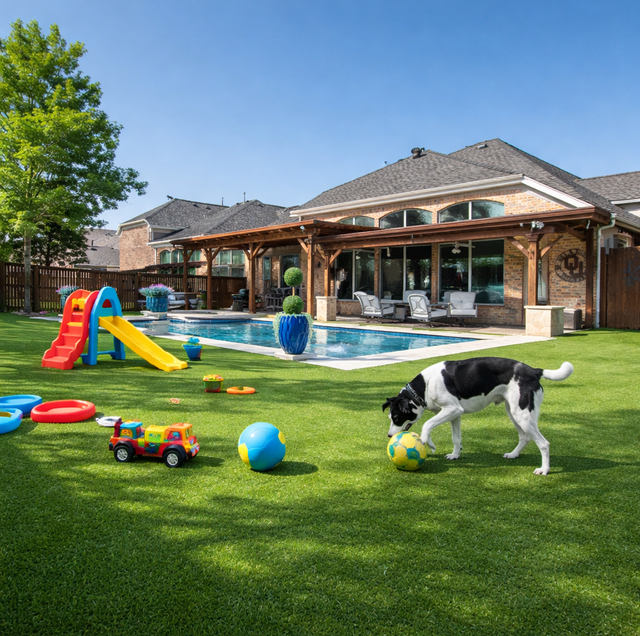
It is a warm afternoon, and the backyard is busy. The kids are sprawled on the turf building something out of blocks, barefoot, faces close to the blades. The dog flops down in the middle of it, rolls onto its back, then gets up to chase a ball across the same patch of ground. Snack crumbs land here and there. Somebody spills half a juice box. At some point, most parents look at all of it and ask a reasonable question: is this surface actually clean enough for everyone to be lying on it?
It is a fair thing to wonder, and the honest answer is a reassuring one with a condition attached. Artificial turf can be a very sanitary place for kids and pets to play, and in some ways it starts ahead of a natural lawn. What keeps it that way is a bit of routine care, because turf does not clean itself the way people assume a plastic surface would.
What "Sanitary" Really Means for a Plastic Lawn
Start with the good news, because it is real. Artificial turf is made of inert plastic fibers over a draining base, usually with an infill of sand or rubber granules packed around the blades. Plastic and sand are not living material. They do not host the soil life that a natural yard does, which means turf does not grow mold, mildew, or fungus the way damp soil and thatch can, and it does not turn into a mud pit that tracks into the house on small feet and paws.
So the surface itself is not a source of contamination. Nothing about the plastic is dirty by nature. That is a genuine head start, and it is why turf is often the more predictable choice for a yard that sees heavy kid-and-dog traffic.
The catch is that "does not grow anything on its own" is not the same as "stays clean on its own." Everything that lands on the turf from the outside, and there is a lot of it in a busy yard, has to actually go somewhere. On turf, a good deal of it does not simply break down and vanish. It settles into the infill and waits.
The Blades Look Clean, but the Infill Is the Real Story
Run your eyes across turf after a rinse, and it looks spotless. The part that decides how sanitary it is sits lower, down in the infill at the base of the fibers, out of direct sun and out of sight.
Think about what a family and a pet deposit there over a few weeks. Pet urine soaks straight down and dries into uric acid crystals in the granules. Traces of solid waste work into the base after a cleanup. Then add the human side that people rarely picture: food and snack crumbs, sugary drink spills, sunscreen, sweat, skin oils, and the general body residue that comes off bare feet and hands and a dog's coat. All of it is organic, and organic residue is what bacteria feed on.
Here is the difference that catches people off guard. In a real lawn, soil is a living filter. Worms, insects, fungi, and billions of soil bacteria digest that organic matter and pull a lot of it apart over time. Infill has none of that. Sand and crumb rubber are inert, so there is no underground cleanup crew breaking anything down. Whatever settles in and is not physically removed simply stays, and a plain rinse with the garden hose spreads and dilutes it without lifting the bound residue out. The blades come clean. The reservoir underneath does not.
None of this means a well-used yard is a health hazard. It means the part that needs attention is the layer you cannot see, and that "it looks fine" is not the measure that matters.
What the Sun Does, and What It Cannot Do
A common assumption is that sunlight handles the problem. Leave turf out in strong light and heat, and it should bake itself clean. There is a grain of truth in it. Ultraviolet light and heat do dry the top of the turf and can reduce some organisms right at the exposed surface, which is one reason a sun-baked yard often smells less on a dry day.
But sun is a surface effect, and the residue that matters is not on the surface. It is down in the shaded base of the fibers where the granules hold moisture and light never fully reaches. Heat actually cuts the other way there. Warm, damp infill speeds up bacterial activity and the breakdown of urine into ammonia, which is why odor from a soiled yard often gets stronger in the heat, not weaker. Sun helps the surface feel dry. It does not sanitize the infill, and it certainly does not remove the organic load that keeps feeding the layer. Counting on sunlight to do the cleaning leaves the actual problem in place.
Drainage Is the Quiet Factor That Decides a Lot
If there is one thing that separates a turf yard that stays fresh from one that turns sour, it is drainage. A properly built system lets water pass straight through the backing and away, so urine, rinse water, and rain do not pool.
When drainage is working, the infill dries out between uses and has less standing moisture for microbes to work in. When it is not, because the infill has compacted over years of foot traffic and clogged the pores, or because the base was not graded well, water lingers low in the fibers. That standing moisture is exactly the condition bacteria and odor need. A damp, shaded, compacted patch that never fully dries is the part of a yard most likely to develop a persistent smell and a slick, biofilm feel down in the blades. Keeping the infill loose enough to drain is a real part of keeping turf sanitary, which is why decompacting compacted granules with a power broom is a standard step in a professional cleaning rather than an optional extra.
What Actually Keeps Turf Safe to Play On
The practical takeaway is that turf hygiene is manageable and does not take much once you know where to aim. It comes down to a routine at home plus a periodic deep clean.
Pick up solid waste promptly: the single most useful habit. The longer solid pet waste sits, the more residue works down into the infill where a rinse cannot reach it. Same idea for food and spills: clear them before they settle in and start feeding bacteria or drawing insects.
Rinse regularly, and know its limits: a routine hose-down carries away loose surface debris, dilutes fresh urine, and keeps day-to-day grime from accumulating. It is worth doing. Just understand what it is not doing: lifting the bound residue and bacteria already down in the granules. Rinsing manages the surface; it does not sanitize the infill.
Bring in a periodic deep clean: this is the step that reaches the layer home care cannot. A professional service uses commercial-grade equipment to power-broom and decompact the infill, power wash hardened residue the hose leaves behind, and then extract waste, uric acid crystals, pet hair, and bacteria out of the infill rather than just spraying over the top. Some services follow that with an anti-bacterial pre-soak and an all-natural bio-enzyme treatment; providers state these steps kill or digest the large majority of common bacteria, and it is fair to treat those figures as the company's stated process rather than a medical guarantee. The point that holds regardless of the marketing numbers is mechanical: extraction physically removes the load, and removing it is what makes a surface clean instead of merely deodorized. A common cadence is every four to six weeks for a busy yard with kids and dogs, less often for lighter use.
Do those three things and turf earns its reputation as a clean, low-maintenance place for a family. Skip the deep clean for a year and the same surface slowly becomes a reservoir, no matter how often it gets hosed down.
How Clean Is Clean Enough
It helps to keep the whole thing in proportion. A turf yard that gets waste picked up promptly, a regular rinse, and a periodic professional sanitizing is a truly sanitary surface for kids to lie on and pets to roll in, cleaner in many ways than a muddy lawn full of insects and decomposing droppings. The risk people worry about is not the plastic. It is neglect, the months of accumulated residue in an infill that never gets extracted. That is a maintenance gap, and maintenance gaps are fixable. Match the cleaning to how hard the yard gets used, pay attention to the infill rather than just the blades, and the surface stays the easy, low-worry place to play that made you choose it.
Frequently Asked Questions
It depends on care, but turf carries some real advantages. A grass lawn holds soil, mud, insects, and the eggs and droppings of birds and other animals, and it stays damp under the thatch. Turf has no mud to track inside and no soil ecosystem, so it starts cleaner and dries faster. The trade-off is that grass slowly decomposes what lands on it, while turf does not, so turf depends on you removing waste instead of the ground doing it. Cared for, turf is often the more sanitary of the two; neglected, it can hold residue a lawn would have broken down.
With the all-natural, non-toxic products many turf-cleaning services use, there is typically no wait time, and providers state the surface is safe to use right after treatment. That differs from a harsh chemical disinfectant, which may call for keeping children and animals off until the area dries. If a service uses anything with acids, solvents, or strong caustics, ask about a re-entry window; the all-natural bio-enzyme approach is specifically designed to avoid one.
No. Antimicrobial infill is one component that can slow bacterial growth on the granules, but it does not remove solid waste, uric acid, food residue, or the organic load that builds up on top of it. It also does not restore drainage once the infill compacts. Treat it as a helpful feature, not a substitute for picking up waste, rinsing, and a periodic extraction. Marketing claims for these products are best read as the manufacturer's stated performance rather than proof the yard cleans itself.
Well-maintained turf is a reasonable surface for little ones, and it avoids the mud and standing dirt of a lawn. The sensible precautions are the same ones you would use anywhere outdoors: keep the play area away from the spot the dog uses, wipe down a section before a baby is set on it, keep food off the turf during floor play, and wash hands afterward. The variable that matters is how recently the yard was properly cleaned, not the turf itself.
They do more than smell. Sugary drinks, milk, and food crumbs are organic fuel, and once they settle into the infill, they feed bacteria and can draw ants, gnats, and flies to that spot. A sticky soda spill left in the granules is a small feeding station. Rinsing it out promptly, while it is still on the surface and before it works down, is far easier than extracting it later, which is another reason quick cleanup beats waiting for the next deep clean.
For a yard that sees daily kid and dog use, a common recommendation is every four to six weeks, which keeps the infill from building a heavy load between visits. A lightly used yard, or one without pets, can go longer. Let the yard tell you: a smell that returns quickly after a rinse, damp patches that stay wet, or extra flies over one area are signs the infill is due, regardless of what the calendar says.
Book a professional turf sanitizing and extraction — the deep clean that reaches the infill so your kids and pets have a properly fresh surface to play on. TurfWash serves Phoenix and the surrounding metro, from Scottsdale and Mesa to Gilbert, Chandler, Glendale, and Surprise. Call (602) 560-8582.
