
Silica Sand vs. Crumb Rubber Infill: Which Suits Pets Best
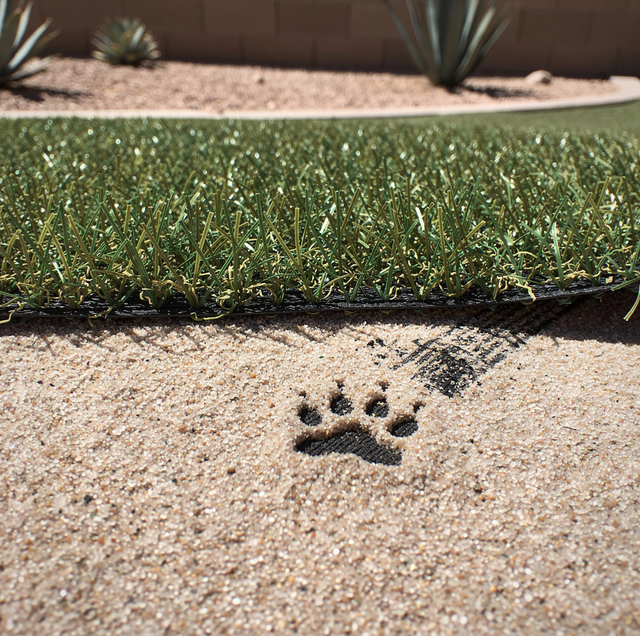
Ask a technician who cleans turf for a living which infill they'd choose for a yard full of dogs, and most won't hesitate. Infill, the layer of loose granular material packed between the blades, does more work in a pet yard than the grass sitting on top of it, and the two materials most yards are built on, silica sand and crumb rubber, behave differently enough that the choice affects how often that yard needs attention for years afterward.
What Infill Actually Does
Infill isn't filler in the casual sense. It weighs the backing down so it lies flat, supports each blade at the base so it stands upright rather than collapsing under a footstep, and cushions impact. It also happens to be where urine, dander, and debris settle after passing through the blades, which is why the choice of infill has a direct effect on how a yard smells and how it's maintained.
Silica Sand: Denser, Less Porous, Faster to Rinse Clean
Silica sand is fine, rounded, kiln-dried sand, and its particles are relatively smooth and non-porous compared to rubber granules. That density and low porosity mean the liquid tends to pass through and around the grains rather than soak into them, which limits how much bacteria-laden moisture the infill itself holds onto after urine or rinse water passes through.
Sand also runs cooler than rubber in direct sun, since its lighter color reflects more solar radiation rather than absorbing it, which matters in a yard where pets walk on the surface barefoot, so to speak, for hours a day. Drainage tends to remain more consistent over time, too, since sand doesn't compact into the dense mat that rubber granules can form under repeated pressure.
The tradeoff is weight distribution and feel. Sand alone can shift or migrate to low spots over time under heavy foot and paw traffic, and it doesn't cushion impact quite as well as rubber, which is part of why sand is often blended with another infill rather than used entirely on its own in high-activity yards.
Crumb Rubber: Better Cushioning, More Odor Retention
Crumb rubber is made from recycled tire rubber ground into small granules, and it's a mainstay in sports and playground turf because of its ability to absorb impact, an important factor for kids' play areas and athletic fields where a fall needs to be cushioned. It also tends to hold its shape and depth better under sustained heavy traffic than sand does.
The tradeoff shows up specifically in pet yards: crumb rubber granules are more porous than sand, with more internal surface area for both moisture and bacteria to cling to. That porosity means it holds onto odor-causing bacteria longer once urine has soaked in, and it takes in more heat from the sun and holds it into the evening, since dark rubber absorbs a wider range of the light spectrum than pale sand does. In a yard with one or more dogs using the same corner repeatedly, crumb rubber's higher porosity is usually the reason that spot needs cleaning more often than a comparable sand-infilled yard would.
Antimicrobial Infill: A Treated Middle Ground
Antimicrobial infill is a blend, often built on a sand or rubber base, treated with an additive designed to slow bacterial growth on the granules themselves. It doesn't stop urine from reaching the infill or dissolve uric acid crystals once they've bonded to a granule, but it can slow how fast bacteria multiply on fresh moisture between cleanings, which is one reason it shows up as an upgrade option in pet-heavy installations rather than a full substitute for a regular cleaning schedule.
Side-by-Side: Infill Type for a Pet Yard
| Factor | Silica Sand | Crumb Rubber | Antimicrobial Blend |
|---|---|---|---|
| Odor retention | Lower; less porous, drains faster | Higher; porous granules hold bacteria longer | Moderate; slows bacterial growth, doesn't stop it |
| Heat retention | Lower; lighter color reflects more sun | Higher; dark, dense, holds heat into evening | Depends on base material used |
| Drainage over time | Stays consistent; resists compaction | Can compact under heavy traffic, slowing drainage | Depends on base material used |
| Cushioning for play | Moderate; often blended for more give | Higher; standard for sports and playgrounds | Depends on base material used |
| Best fit for | Pet-primary yards focused on odor control | Mixed-use yards with kids and heavy play | Pet-heavy yards wanting extra odor resistance between visits |
| Cleaning frequency needed | Can often stretch toward the six-week end of interval | Often needs the four-week end, especially multi-dog homes | Similar to sand or rubber base, slightly extended |
What the Cleaning Process Has to Work Around
Whichever infill is already installed, the maintenance approach adjusts around it rather than the other way around. Power brooming decompacts whichever material is in the yard, since both sand and rubber pack down under traffic, just at different rates. Extraction pulls waste, hair, and bacteria out of the spaces between the granules, and that step matters more with rubber's higher porosity, since more material tends to be trapped deeper in a rubber layer than in an equivalent sand layer after the same amount of time. The anti-bacterial pre-soak step and the follow-up bio-enzyme application work on the surface of whatever infill is present, so the choice of infill affects how often the full process needs to be repeated, not whether it's needed at all.
Blended Infill: Getting Part of Each Advantage
Some yards use a blended infill, sand mixed with a smaller ratio of rubber or an antimicrobial additive layered through a sand base, rather than committing entirely to one material. The logic is simple: sand's cooler surface temperature and lower odor retention pair with rubber's added cushioning in a ratio that leans toward whichever priority matters more for that specific yard. A blend skewed heavily toward sand with just enough rubber for underfoot cushioning tends to suit a pet-only yard better than an even fifty-fifty mix, which starts to inherit more of rubber's heat and odor characteristics as its share of the blend increases.
Blended infill isn't a universal upgrade over a single material, though. It adds a layer of complexity to maintenance, since a technician working infill during a decompaction pass needs to account for how different particle sizes and densities separate and settle over time, rather than treating the layer as a single uniform material. For a plain pet yard with no play equipment or heavy kid traffic, a single, well-chosen infill often outperforms a blend simply because it behaves predictably.
How Infill Interacts With the Backing Underneath
The backing layer beneath the infill has small perforations designed to let water and rinse-down drain through rather than pool on the surface. Infill sits directly on top of that backing, and how well it lets water pass through to those perforations depends on how tightly the granules pack together. Rounder, smoother sand particles tend to nestle into a denser arrangement than more irregularly shaped rubber granules, which sounds like it would drain worse, but in practice rubber's irregular shape is also what makes it compact into a denser mat under sustained pressure, closing off drainage gaps that sand's more uniform particle size tends to preserve longer.
This is part of why a yard with heavily compacted rubber infill can develop a slow-draining section well before a comparable sand-infilled yard does, even though the two materials start out with similar drainage ratings when freshly installed. Regular decompaction resets both, but the underlying tendency toward compaction varies by material, which is another factor behind the different cleaning intervals recommended for each.
What This Means for a Multi-Pet Household Specifically
A household with two or more dogs sharing the same yard sees urine volume that a single-pet yard doesn't, and infill choice becomes more consequential as that volume rises. Crumb rubber's higher porosity means it absorbs and holds a larger total volume of bacteria-laden moisture across the same square footage when multiple dogs use it daily, which is why multi-dog homes on rubber infill tend to notice odor returning faster between cleanings than single-dog homes on the same material. Switching the highest-traffic zones to sand or an antimicrobial blend, even without redoing the entire yard, is one way some multi-pet households manage that specific pressure point without a full infill replacement everywhere.
Frequently Asked Questions
Switching from one infill material to another means pulling out what's there and putting in something new, which is a different scope of work than a cleaning and maintenance visit. It isn't something to assume is bundled into a standard appointment. If you're considering a change, it's worth a direct conversation about what that involves, since infill work of that size typically runs through the installation side of the business rather than a routine maintenance visit.
New crumb rubber can carry a faint rubber scent in the first weeks after installation, especially in full sun, but that fades as the material off-gasses and isn't related to the bacterial odor cycle caused by pet urine over time.
Sand tends to run cooler underfoot in direct sun, which matters more for comfort than texture, since both materials are covered by the same synthetic blades a dog actually walks on. Neither infill type is abrasive to paw pads under normal conditions.
Where you'll notice it most is after a Phoenix monsoon downpour specifically, since a fast, heavy rain event tests drainage more than a light, steady rain does. A compacted rubber-infilled section can show standing water on the surface longer after a monsoon storm than a sand-infilled section getting the same rainfall, simply because water has more trouble working through packed rubber granules to reach the backing's perforations. If one corner of the yard is still visibly wet well after the rest has drained, that's usually a decompaction issue rather than a fundamental flaw in the infill installed there.
Often, yes. Sports turf and putting greens usually prioritize consistent ball roll and cushioning, which favors rubber or specialized blends, while a residential yard focused on pet odor control often leans toward sand or an antimicrobial blend instead. Both applications use the same underlying cleaning process.
Depth varies with turf pile height and infill type, but a life inspection during a cleaning visit checks whether the infill has settled below its original depth, since low or uneven infill reduces both blade support and drainage capacity regardless of the material used.
Neither infill is universally better; they trade off differently depending on how the yard is actually used. A yard with one or two dogs and no kids' play equipment leans toward the advantages of sand's odor and heat. A yard splitting time between pets and active play leans toward rubber's cushioning, with a tighter cleaning schedule to offset its odor retention. Knowing which tradeoff you're accepting is what makes the infill choice, and the maintenance plan built around it, actually work.
Ask about an infill assessment — find out which infill in your yard is driving your cleaning schedule and what would change it. TurfWash serves Phoenix and the surrounding metro, from Scottsdale and Mesa to Gilbert, Chandler, Glendale, and Surprise. Call (602) 560-8582.
